When Moms Ask for “Alone Time”: Why It’s So Hard to Take It, and Why It Matters
Every year around Mother’s Day, there is a question that quietly circulates at brunch tables and across social media: What do you want this year?
And year after year, one of the most common answers from mothers is surprisingly simple.
“Alone time.”
No flowers. No jewelry. No elaborate plans. Just uninterrupted space.
It almost sounds funny when you think about it. If so many mothers want alone time, why is it so hard to actually take it?
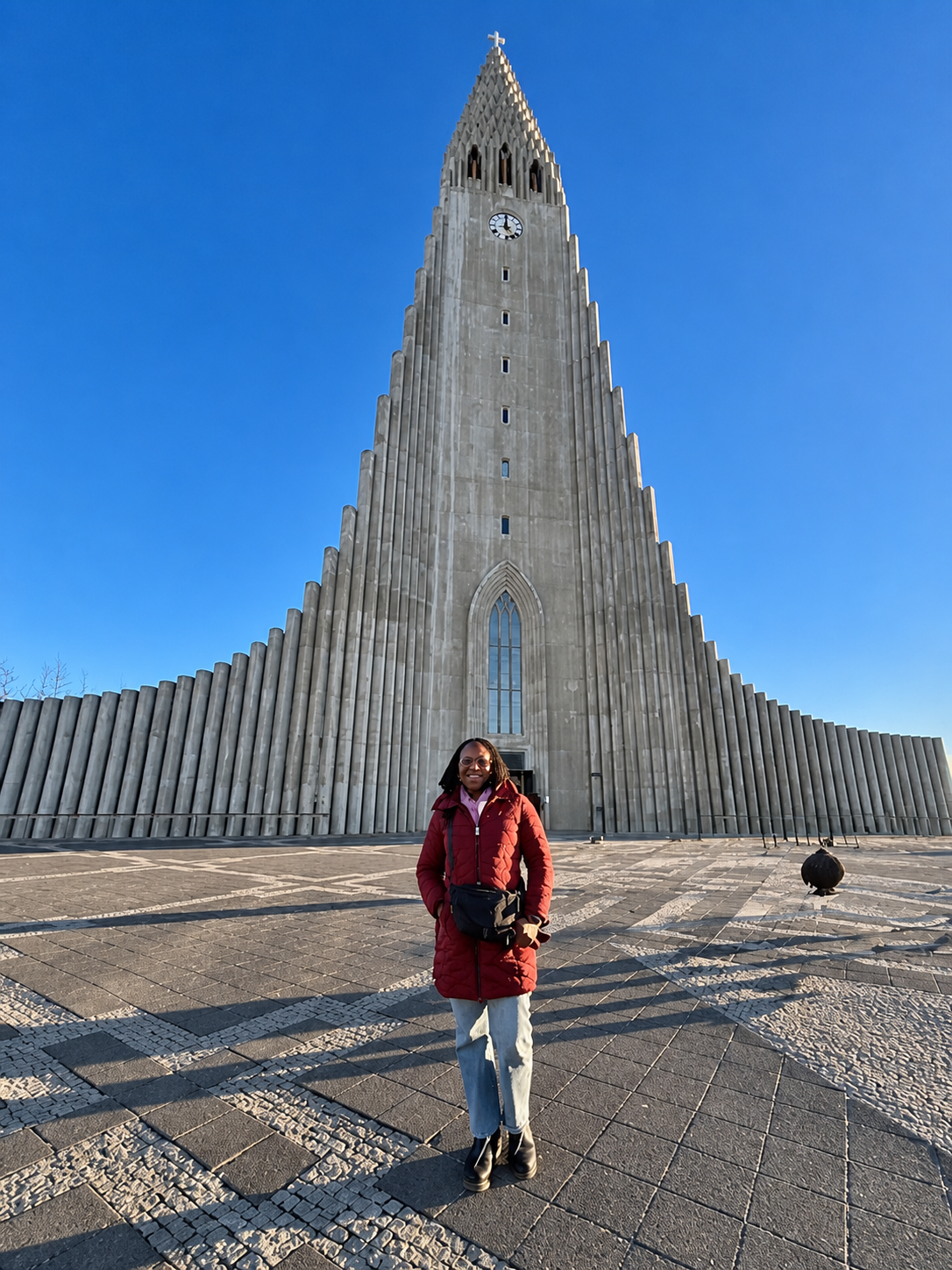
Hallgrimskirkja, Iceland
Research consistently shows that 68% of moms take only 1 to 5 hours of “me time” each week, while fathers report significantly more leisure time for themselves. And that number does not even account for the mothers who never attempt it at all. Many women abandon the idea before it ever becomes real, not because they don’t need it, but because the planning, the emotional labor, and the anticipated guilt feel too heavy.
This blog is not for every mom. Some mothers are still in a season where stepping away feels impossible. Some moms are single parents, and don’t have a community. Some struggle deeply with guilt at the thought of leaving their children. But for those who feel that quiet longing, for a few hours, a weekend, or even longer, this is for you.
Last year, I turned 40. My husband asked if I wanted a party. I am not your party kind of girl. What I needed was not celebration.
What I needed was solitude.
Not the curated mountain retreat kind. Not the kind where you are escaping your life. But the kind that allows you to reconnect with yourself, the older parts of you that existed before you became “Mom,” before you became a business owner with a growing team, before you were responsible for everyone else’s needs.
So I asked for something bold.
A week to travel alone.
The Internal Conflict Before the Plane Ticket
I was not sure I could do it.
I was not sure it was a “good time” for work. I was not sure if stepping away from my family would make me a bad mom. I was not sure whether I would enjoy it or spend the entire time feeling guilty.
So I dared myself.
If I hated it, I would say I tried. Maybe my needs had changed with my titles and responsibilities over the years. But I wanted to know.
When I booked my first stop, to visit a graduate school friend in Barcelona, something shifted. She encouraged me to add other cities. “You’re already going,” she said. “Make it yours.”
So I added Paris. I added Iceland.
As the itinerary expanded, so did my excitement.
But alongside excitement was planning. So much planning.
Why Most Mothers Struggle to Prioritise Their Mental Health and Take Time Away
Here is the part we do not talk about enough.
Many mothers give up on taking alone time not because they do not want it, but because of everything required to make it happen.
The invisible checklist begins:
Who is handling school drop-off?
Who is managing birthday parties?
What about dinner?
Are the school forms signed?
Is the pickup authorization updated?
What if someone gets sick?
What if something is forgotten?
Even in supportive marriages, and I have one, most women cannot help but over-function before leaving.
My husband told me, “Just leave. Don’t worry about anything.”
But most mothers cannot “just leave.”
When my husband travels for work, he packs a bag and goes. That is a privilege many mothers cannot imagine granting themselves.
Before I left, I cooked meals to make life easier. I scheduled birthday parties and school events into the family calendar. I updated pickup authorizations. I coordinated with friends who offered to help with dinner and bedtime. One friend loaned me warm clothes for Iceland. Others were on call for backup.
This is what often stops mothers.
The mental load.
The extra labor before departure.
And here is the irony: even when mothers do leave, they rarely leave completely.
Managing the Household From Afar
Research and clinical experience both tell us something important: many mothers who take alone time continue managing household tasks from a distance.
They text reminders.
They check school apps.
They troubleshoot bedtime.
They monitor group chats.
They coordinate carpools from another country.
In my Raleigh therapy practice, I see this often. Professional women who travel for work sit in boardrooms while texting about dentist appointments. They present at conferences while checking in about homework. They manage emotionally and logistically from afar.
They are “away,” but not fully relieved.
So when 68% of mothers report taking only 1 to 5 hours of personal time each week, we must ask: are they ever truly off duty?
The answer is often no.
And because the planning is so extensive, and the mental load continues, many women simply decide it is easier not to try.
The Questions No One Asks Fathers
When people learned I was traveling alone for eight days, the reactions were revealing.
Many women applauded me. They told me how brave I was. They said they wished they could do the same.
But I also heard:
"Where are the kids staying?"
"Who’s taking care of them?"
"Is your husband taking time off work?"
I understand where those questions come from. But I could not ignore the double standard.
When my husband leaves for work, no one asks him who is caring for the children. No one questions whether it is the right time.
As a mother who had barely taken two nights away in nearly eight years, those comments stung.
They reinforced what so many mothers internalize: your presence is required at all times.
And yet, within healthy family systems, every member is allowed to have needs.
What I Discovered in Eight Days
Barcelona greeted me with warmth and movement. Paris offered quiet dinners alone. Iceland gave me vast landscapes that reminded me how small I am in the best way.
I made a dinner reservation for one.
At first, I felt self-conscious. But then I realized something beautiful: when you are in a restaurant, you are never truly alone. You are surrounded by life unfolding.
I missed my family. I thought about them constantly.
And here is the part that surprised me most:
They were okay.
The house did not collapse. My children were fed. My husband managed. The world did not fall apart because I stepped away.
I still checked in. I still coordinated a few things. But I did not carry everything.
That shift mattered.

Cathedral of Barcelona

Park Güell, Barcelona — the first stop on Marina’s solo journey.
Mom Guilt and Maternal Mental Health: Making Peace With It
Guilt is part of motherhood.
If you work, you feel guilty. If you stay home, you feel guilty. If you ask for help, you feel guilty. If you don’t, you feel overwhelmed.
The goal is not to eliminate guilt. The goal is to make peace with it.
During my trip, guilt and freedom coexisted. I did not have to choose one or the other.
And I returned home more grounded.
Not transformed into someone new. Just more connected to myself.
I am a better mother because I allowed myself to step away.
Why Alone Time Models Something Powerful for Our Children
When mothers take time for themselves, it sends a message:
There is more to a woman’s identity than motherhood.
Our children benefit from seeing us as whole people, with interests, friendships, and needs outside the home.
It teaches autonomy.
It models balance.
It demonstrates self-respect.
And it quietly shows them that caregiving is shared.
Practical Steps for Planning Your Own Time Away
If you are a mother who wants to take time for yourself, here are practical ways to make it successful:
1. Name the Desire Clearly
Say it out loud. “I need time away.” You do not have to justify it.
2. Plan With Your Partner, Not Around Them
Create shared ownership of logistics. Resist over-functioning. Different does not mean wrong.
3. Use Your Village
Ask friends for help. Coordinate carpools. Arrange meal swaps. Community makes absence possible.
4. Prepare Without Controlling
Prep meals if it eases your mind. Update calendars. But leave space for others to step in fully.
5. Give Yourself Permission Before You Go
Decide in advance that you are allowed to enjoy this. Guilt may still show up. That is okay. You do not have to send it away, but you do not have to let it run the trip either.
6. Start Small If a Week Feels Too Big
A solo afternoon. An overnight. A weekend. The length of the trip matters less than the practice of taking it. Every time you step away and return whole, you build evidence that it is safe to do so.
You Are Allowed to Have Needs
Motherhood is one of the most meaningful things you will ever do. And it is also one of the most consuming.
Taking time for yourself is not a luxury. It is not selfish. It is not a sign that you love your children less. It is a sign that you understand something important: you cannot pour from an empty cup.
The world does not fall apart when you step away. And when you return, you come back more present, more patient, more you.
If you are a mother navigating guilt, burnout, or the quiet sense that you have lost yourself somewhere along the way, therapy can help. At Hearth Counseling & Consulting, we support women at every stage of motherhood. You do not have to figure this out alone.
Sources
American College of Obstetricians and Gynecologists — Postpartum Depression
PMC — Postpartum Depression: Prevalence and Timeline
CDC — Timing of Postpartum Depressive Symptoms
PostpartumDepression.org — PPD Statistics
UT Southwestern Medical Center — Postpartum Depression in Dads
NIH PMC — Postpartum Depression in Men
About the Author
Marina Cline, MA, LCMHC-S, PMH-C, EMDR-CIT
Marina Cline is a licensed clinical mental health counselor, trauma therapist, and the owner of Hearth Counseling & Consulting in Raleigh, North Carolina. She specializes in working with women and mothers, particularly around pregnancy, postpartum, and the emotional challenges that come with those transitions. Marina is passionate about helping women feel supported in seasons where they are often expected to hold everything together. Whether it’s anxiety, burnout, or the invisible load of motherhood, her work focuses on creating space for women to be seen, heard, and cared for, too.